Flint Wire Rope Hoist

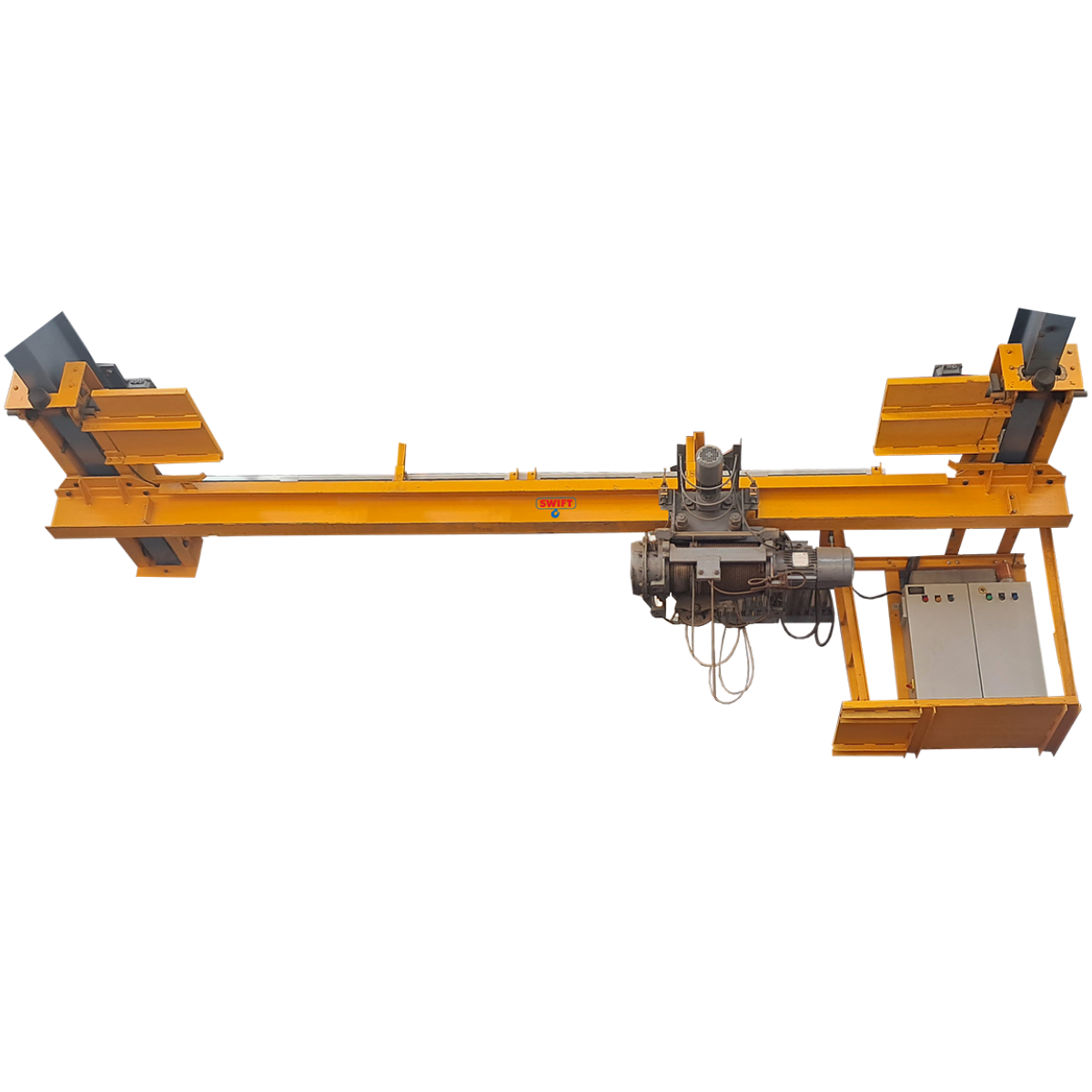
Single Girder Underslung E.O.T. Crane

Single Girder Underslung E.O.T. Crane

Our Single Girder Underslung E.O.T. Cranes are engineered to provide versatile lifting in environments where ceiling height or structural limitations prevent the installation of standard overhead cranes. These cranes run on the bottom flange of runway beams, making them ideal for low-headroom areas and lighter structural frameworks. With safe working loads from 0.5 tons to 40 tons and spans up to 30 meters, they offer a space-saving and structurally adaptable solution for diverse material handling needs.

Features

Benefits

  • Bottom-running design allows installation without dedicated gantry columns, saving floor space
  • Compatible with light structures and facilitates better integration into existing building designs
  • Welded box-type or rolled 'I' beam construction ensures strength and rigidity
  • Wire rope guide rings reduce wear and ensure smooth hoisting performance
  • Long and cross-travel drives are compact and energy-efficient
  • Equipped with DC electromagnetic brake or AC thruster brake for hoisting, with customizable braking options for travel motions
  • Limit switches and emergency upper limit switches enhance operational safety
  • Ideal for covering wider spans without compromising on headroom or operational clarity
  • Suitable for buildings with space constraints where overhead beams cannot support cranes
  • Reduced infrastructure costs due to no need for additional gantry columns
  • High adaptability to existing layouts and low ceiling heights
  • Enhanced productivity through reliable motion control and minimal operator fatigue
  • Maintains all safety and performance standards while offering installation flexibility

Features

  • Bottom-running design allows installation without dedicated gantry columns, saving floor space
  • Compatible with light structures and facilitates better integration into existing building designs
  • Welded box-type or rolled 'I' beam construction ensures strength and rigidity
  • Wire rope guide rings reduce wear and ensure smooth hoisting performance
  • Long and cross-travel drives are compact and energy-efficient
  • Equipped with DC electromagnetic brake or AC thruster brake for hoisting, with customizable braking options for travel motions
  • Limit switches and emergency upper limit switches enhance operational safety
  • Ideal for covering wider spans without compromising on headroom or operational clarity
dbe

Benefits

  • Suitable for buildings with space constraints where overhead beams cannot support cranes
  • Reduced infrastructure costs due to no need for additional gantry columns
  • High adaptability to existing layouts and low ceiling heights
  • Enhanced productivity through reliable motion control and minimal operator fatigue
  • Maintains all safety and performance standards while offering installation flexibility

Optional Features

  • Anti-collision systems for multiple cranes working in the same bay
  • Independent moving pendant controls
  • Load limiter and load indicator options
  • Slack wire limit switch for added safety
  • Hour meter for operational tracking
  • Radio remote control for flexible operation
  • Alarm systems and bridge lights for enhanced visibility and safety
  • Tandem operation of hoists

FAQs

1. What is a Single Girder Underslung EOT crane?
A Single Girder Underslung crane is an overhead crane that runs on the bottom flange of runway beams, making it suitable for facilities with limited headroom or structural constraints.
2. What capacity range is available for underslung cranes?
These cranes support safe working loads from 0.5 tons to 40 tons depending on design and application.
3. What span can underslung cranes cover?
Single girder underslung cranes can operate across spans up to 30 meters, offering flexibility for large work areas.
4. Why choose an underslung crane instead of a standard overhead crane?
Underslung cranes are ideal where ceiling height is limited, where building structures cannot support top-running cranes, or where space optimization is required.
5. How does the bottom-running design benefit installations?
The bottom-running design eliminates the need for dedicated gantry columns, reducing infrastructure costs.
6. What structural construction is used in these cranes?
They feature welded box-type or rolled I-beam girders for strength and rigidity.
7. What braking system is used?
The crane typically uses DC electromagnetic brakes or AC thruster brakes for hoisting operations.
8. What safety features are included?
Safety features include limit switches, emergency upper limit switches, and overload protection.
9. Can underslung cranes be installed in existing buildings?
Yes. They integrate easily into existing structures and lightweight frameworks.
10. What control options are available?
Control options include pendant control systems and radio remote control for flexible operation.