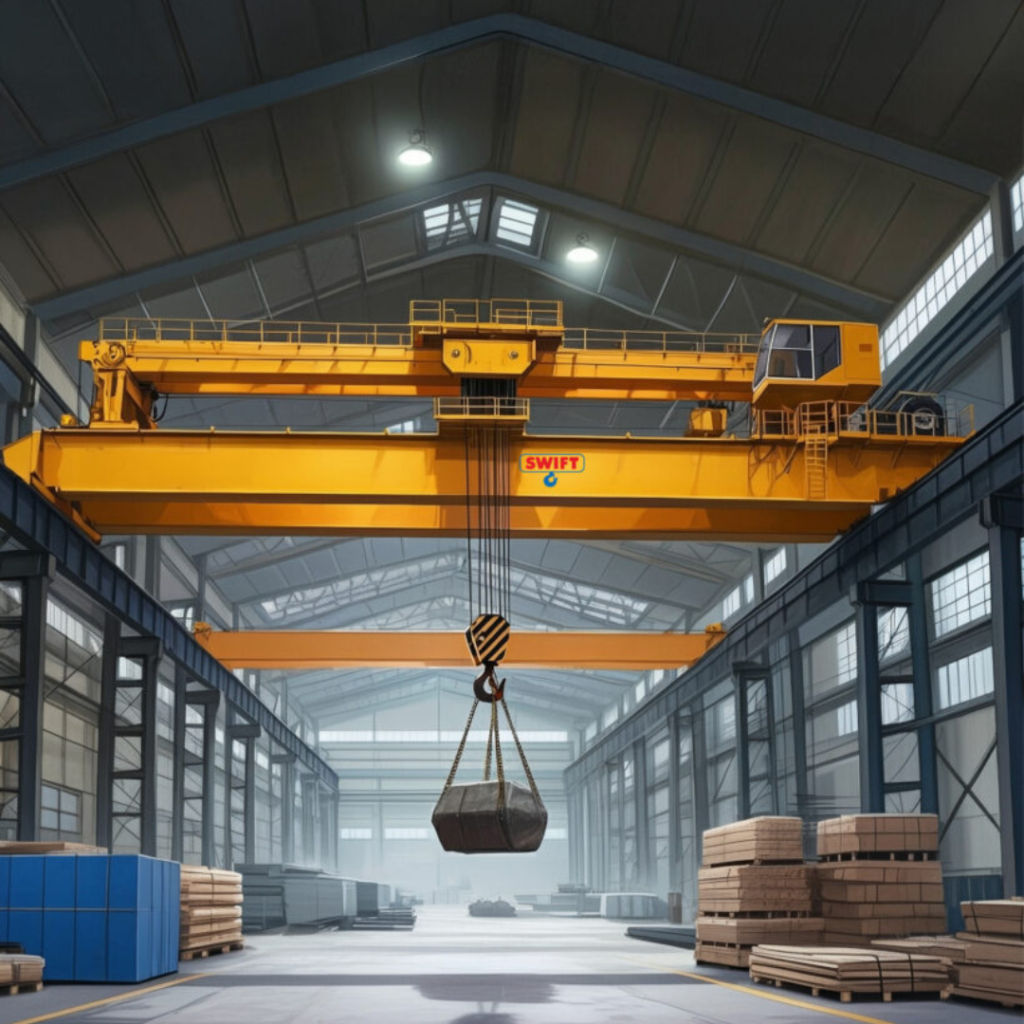
When it comes to cranes and hoists, most buyers focus on capacity, speed, and brand reputation. But there’s one factor that influences the equipment’s performance more than any other, duty classification.
Duty class determines how a hoist or crane is expected to perform under real-world conditions: how often it lifts, how heavy the loads are, and how many operating hours it handles in a day. Choosing the wrong duty class leads to premature wear, unscheduled breakdowns, and massive maintenance costs. Choosing the right one ensures reliability, longer equipment life, and a much safer work environment.
Whether you’re an engineer, procurement head, maintenance supervisor, or plant manager, understanding duty classifications is essential for matching equipment with operational needs. This guide breaks down the duty class standards and explains how to select the right one for your application.
What Is Duty Classification and Why Does It Matter?
Duty classification is essentially a usage profile for the hoist or crane. It defines how the equipment will behave based on:
- How frequently it operates
- How heavy the loads are
- How often full load is lifted
- Duration of lifting cycles
- Operating environment and shift patterns
Manufacturers use duty classes so buyers can choose equipment designed for their exact requirement, not over- or under-spec.
Why Does It Matter?
Because the wrong duty class leads to:
- Overheating motors
- Accelerated gear wear
- Brake failures
- Frequent breakdowns
- Costly component replacements
- Unsafe lifting conditions
Simply put: Duty class determines whether your crane lasts 10 years, or just 2.
Why Understanding Duty Class Helps You Save Money
When you select a hoist or crane that correctly matches your duty cycle, you benefit through:
✔ Longer Equipment Lifespan
No component is over-stressed beyond its intended capacity.
✔ Reduced Downtime
Correctly rated equipment performs reliably, even under heavy cycles.
✔ Lower Maintenance Costs
Brakes, motors, gears, and chains experience lower fatigue.
✔ Better Safety Compliance
Duty class ensures equipment stays within safe working limits.
✔ Optimal Investment
You avoid overspending on higher-duty equipment when it’s not needed—or underspending and paying the price later.
Duty class selection is one of the most important decisions in material handling planning.
Duty Classification Standards: An Overview
Different regions use different classification systems, but the purpose is the same: to match equipment to operational severity.
The most commonly referenced standards are:
- FEM (European)
- ISO (International)
- IS (Indian)
- CMAA (American)
- ASME (American)
Let’s break each one down in a simple, buyer-friendly format.
FEM Duty Classification
FEM (Federation Europeene de la Manutention) is one of the most widely adopted standards, especially for hoists, trolleys, and bridge cranes.
FEM Evaluates Based On:
- Load spectrum (how heavy the loads are)
- Daily operating hours
- Frequency of full-load lifts
Load Spectrum Categories
| Category | Description | Full-Load % |
|---|---|---|
| Light | Occasional lifts, light loads, long intervals | ~10% |
| Medium | Regular lifting, moderate loads | ~17% |
| Heavy | Frequent lifting, long daily operations | ~50% |
| Very Heavy | Near-continuous heavy lifting | ~90% |
FEM Notations Explained
- 1Dm / 1Cm — Standby or very rare usage
- 1Bm — Light-duty operations
- 1Am — Light to medium duty
- 2m — Medium to heavy duty (common for factories)
- 3m — Heavy-duty industrial environments
- 4m / 5m — Severe, continuous-duty applications
Most industrial sites select hoists between 1Am and 3m
ISO Duty Classification
ISO standards classify cranes based on load cycles, operating frequency, and load variation.
ISO Duty Classes
| Class | Usage Profile |
|---|---|
| M2 | Occasional usage, minimal operation |
| M3 | Regular usage with light loads, occasional peak loads |
| M4 | Regular medium-load handling, occasional full load |
| M5 | Frequent handling of medium and heavy loads |
| M6 | Heavy use including travel with load, long operating hours |
| M7 | Very heavy use with repeated heavy-load cycles |
Most industry applications fall in the M4–M6 range.
IS Duty Classification
The Bureau of Indian Standards classifies hoists and cranes into five levels based on usage severity.
IS Duty Classes
| Class | Description |
|---|---|
| I – Standby | Rare usage, emergency or backup lifts |
| II – Light Duty | Occasional lifts, low loads |
| III – Medium Duty | Regular operation with varying loads |
| IV – Heavy Duty | Frequent cycles with heavier loads |
| V – Special Duty | Customized for rigorous, high-stress operations |
IS Class III, IV, and V are most common in industries.
CMAA Duty Classification
CMAA categorizes cranes from Class A to Class F, based on operational intensity.
Examples:
- Class A – Standby, infrequent lifts
- Class B – Light machine shops
- Class C – Regular industrial work
- Class D – Heavy machining and foundries
- Class E/F – Steel plants, continuous severe duty
ASME Hoist Classification
ASME focuses specifically on hoists and classifies them based on duty cycle.
- H1 – Installation/maintenance, rare lifts
- H2 – Light-duty lifting
- H3 – Standard industrial lifting
- H4 – Frequent heavy lifting
- H5 – Continuous severe lifting
How to Choose the Right Duty Class
Before choosing a hoist or crane, evaluate the following:
✔ What percentage of time will the crane operate per shift?
✔ What is the average load vs the maximum load?
✔ How many starts per hour are expected?
✔ What is the environmental condition (dust, heat, corrosive atmosphere)?
✔ Are you lifting intermittently or continuously?
✔ Will the crane travel long distances with a load?
Examples
- A warehouse doing 50–60 lifts/day → Medium duty (ISO M4 / FEM 2m)
- A steel plant operating 24/7 → Heavy or very heavy duty (ISO M6–M7 / FEM 3m–4m)
- A maintenance shop → Light duty (ISO M3 / FEM 1Bm)
Choosing the right class ensures your crane lives up to its designed lifespan.
What Happens When You Choose the Wrong Duty Class
The effects show up sooner than you expect:
❌ Frequent motor overheating
❌ Brake lining burnouts
❌ Premature gearbox wear
❌ Rapid chain/rope fatigue
❌ Load safety risks
❌ Warranty rejection due to misapplication
Duty class is not just a technical detail, it is a cost and safety decision.
Conclusion
Choosing the right hoist or crane duty class isn’t just a technical decision—it’s a strategic one. The correct duty classification ensures smoother operations, longer equipment life, safer lifting, and significantly lower maintenance costs. Whether your facility runs occasional lifts or continuous heavy-duty cycles, aligning your equipment with the right duty class will protect your investment and improve overall plant efficiency.
At Swift, we help industries make informed decisions with expert guidance and a comprehensive portfolio of hoists, cranes, spare parts, and service solutions—engineered to meet every duty class requirement across sectors.
If you want to select the right duty class for your application or need customized lifting solutions:
📩 Write to us at: [enquire@csil.in]
📞 Call us at: [+91 9403 89 2303]
Your operations deserve equipment built for the load, the cycle, and the future. Let Swift be your trusted partner in lifting excellence.