Choosing an industrial crane is an important decision for any facility that depends on safe and efficient material handling. But the decision is not simply about choosing between a standard crane and a custom crane.
The better approach is to first understand the application and then discuss the requirements with an experienced industrial crane supplier.
Load capacity, span, lifting height, headroom, duty cycle, operating environment, controls and maintenance requirements can all influence the right crane configuration. Understanding these factors before placing an order can help buyers avoid unnecessary customization while ensuring the equipment is suitable for its intended application.
Quick Answer: Standard or Custom Industrial Crane?
A standard industrial crane can be suitable when the application’s capacity, span, lifting height, duty requirements and operating conditions can be met through an established configuration.
A custom industrial crane may be more appropriate when specific site conditions, specialized load handling requirements, restricted space or particular operating requirements cannot be adequately addressed through a standard arrangement.
The objective should not be to choose the most customized option. It should be to select a crane configuration that properly matches the work, facility and operating requirements.
Standard vs. Custom Industrial Cranes: What Is the Difference?
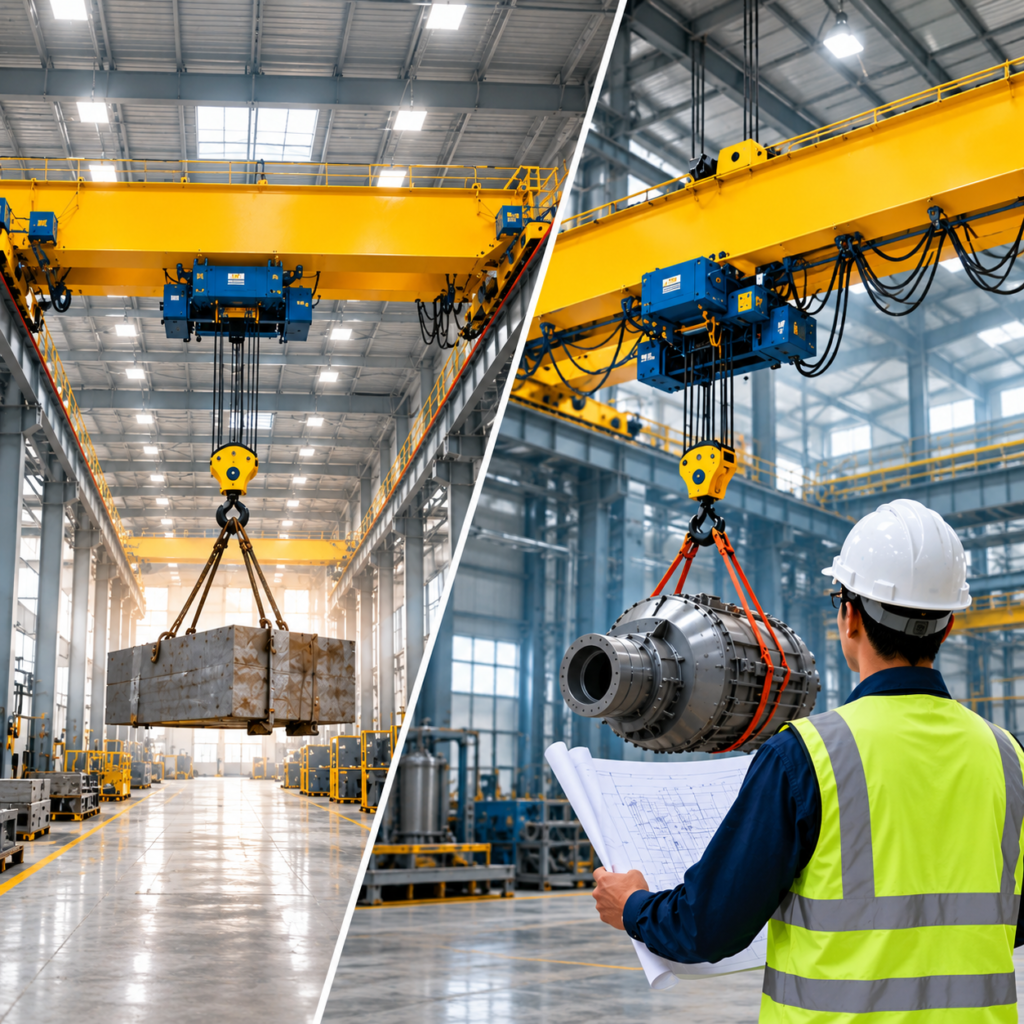
A standard industrial crane generally uses an established design that can be configured according to the requirements of the application.
Customization becomes relevant when the application has requirements that need a more specific arrangement.
In practice, the choice is not always completely standard versus completely custom. An established crane design may still be configured around requirements such as:
- Lifting capacity
- Crane span
- Lifting height
- Operating speed
- Available headroom
- Control requirements
- Working environment
- Material handling needs
This is why buyers should discuss their complete application with the supplier before deciding how much customization is necessary.
| Factor | Standard Industrial Crane | Custom Industrial Crane |
|---|---|---|
| Application | Established lifting requirements | Specific or unusual requirements |
| Configuration | Proven arrangement | Application-specific arrangement |
| Site conditions | Conventional installation conditions | Restricted or unusual conditions |
| Load handling | Defined requirements | Specialized handling requirements |
| Controls | Standard operating requirements | Specific operating requirements |
| Customization | Configuration-based | Greater customization where required |
| Selection focus | Meeting established requirements | Addressing specific application constraints |
Start With the Application, Not the Crane Model
Before discussing a specific crane model, buyers should explain how the crane will actually be used.
An industrial crane supplier needs to understand more than the maximum weight the crane will lift. Information about the facility, materials, operating frequency and workflow can help determine the appropriate configuration.
A useful starting point is to identify:
- What material will be handled?
- What is the maximum and typical load?
- How frequently will the crane operate?
- What lifting height is required?
- What span is required?
- How much headroom is available?
- What are the conditions at the installation site?
- Are there any specific control or positioning requirements?
The clearer these requirements are, the more useful the supplier discussion can be.
What Should Buyers Discuss With an Industrial Crane Supplier?
1. Load Capacity and Load Characteristics
Lifting capacity is one of the first specifications buyers consider, but the discussion should go beyond a single maximum load figure.
The supplier should understand:
- Maximum load
- Typical working load
- Type of material being handled
- Load dimensions
- Frequency of lifting
- Load positioning requirements
- Any specialized handling requirements
A crane used for consistent material handling may have different requirements from equipment handling varied loads or supporting a specific production process.
Accurate load information helps the supplier evaluate the application before recommending a suitable crane configuration.
2. Span, Lift Height and Available Headroom
The available space inside a facility can directly influence crane selection.
Buyers should discuss:
- Required crane span
- Required lifting height
- Available headroom
- Building dimensions
- Hook approach requirements
- Existing structural conditions
- Available runway space
Headroom can become particularly important in facilities where overhead space is limited. In such cases, the available clearance may influence the crane arrangement that can be installed.
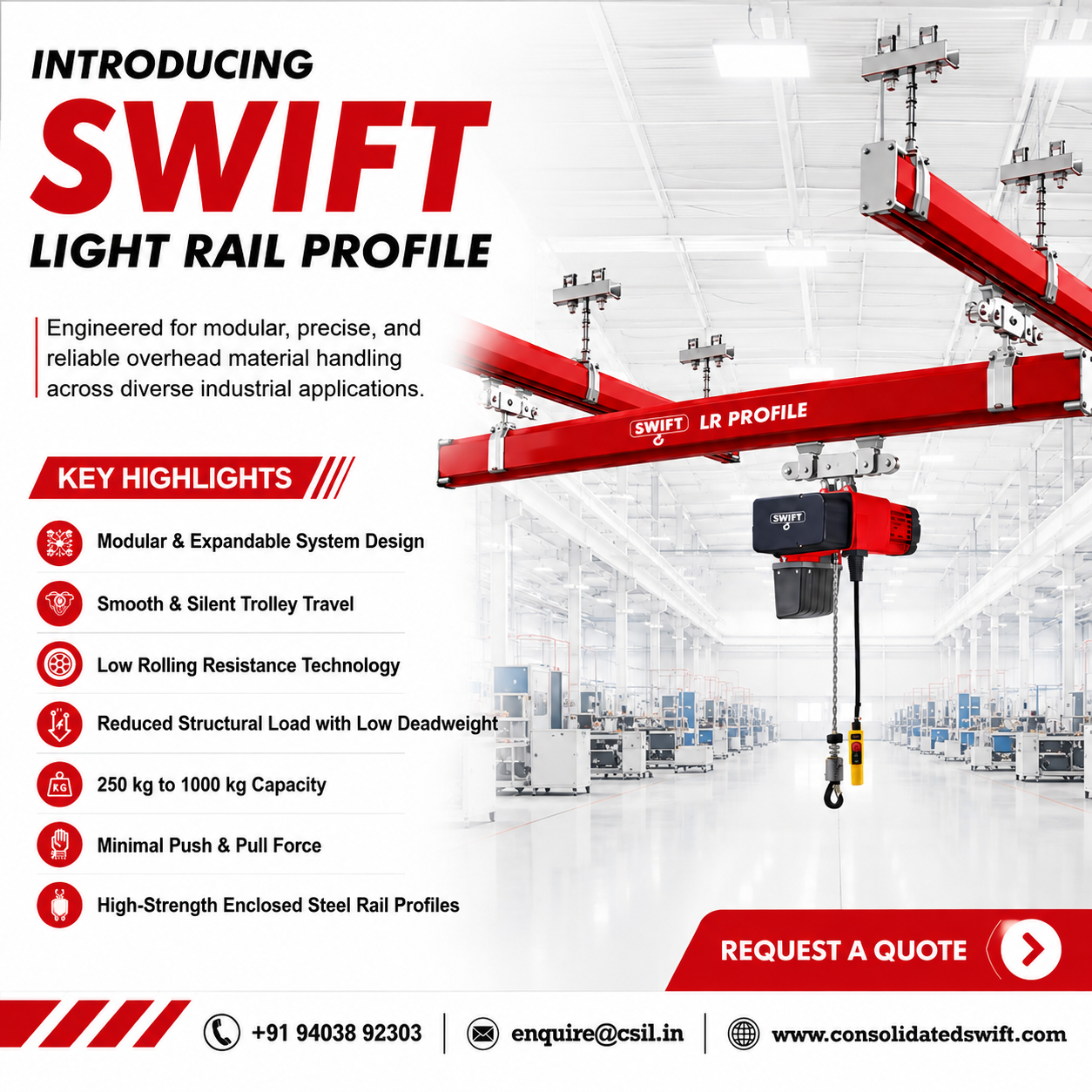
SWIFT offers different crane configurations, including EOT cranes, gantry cranes, jib cranes, semi gantry cranes and underslung EOT cranes for different material handling requirements.
3. Duty Cycle and Operating Frequency
How frequently a crane will operate is another important consideration.
Buyers should discuss:
- Operating hours
- Lifting frequency
- Typical load conditions
- Expected lifting cycles
- Required operating speeds
- Nature of the work
A crane used occasionally may have different operating requirements from equipment that is regularly involved in production activities.
Duty requirements should therefore be considered as part of the overall crane selection process rather than treated as an afterthought.
4. Working Environment
The environment in which the crane will operate should also be clearly explained to the supplier.
Consider whether the application involves:
- Dust
- Moisture
- High temperatures
- Outdoor exposure
- Hazardous areas
- Chemicals
- Intensive industrial activity
- Specialized production environments
Different working conditions can influence the equipment configuration and the features required for the application.
SWIFT provides lifting and crane solutions for a range of industrial sectors, including automotive, cement, construction, defence, engineering, logistics, metal, mining, oil and gas, power plants and railways.
5. Controls, Speed and Positioning Requirements
Crane selection is not only about lifting capacity. How the equipment operates can also affect productivity and usability.
Buyers should discuss requirements such as:
- Lifting speed
- Travel speed
- Control method
- Positioning requirements
- Operator access
- Application-specific operating features
For some applications, controlled and accurate positioning may be more important than simply achieving a higher operating speed.
Explaining the actual workflow to the supplier can help determine which operating features are necessary.
6. Installation and Site Conditions
A crane must ultimately work within the physical conditions of the facility.
Before finalizing the equipment, buyers should discuss:
- Existing building structure
- Runway arrangement
- Installation space
- Power supply requirements
- Access for installation
- Existing material handling equipment
- Required clearances
These considerations are particularly important when installing a crane in an existing facility or replacing existing equipment.
A supplier can only properly evaluate the installation requirements when the relevant site information is available.
When Is a Standard Industrial Crane Suitable?
A standard crane configuration may be suitable when the application has clearly defined requirements that can be addressed through an established design.
It may be appropriate when:
- The required capacity is clearly defined
- The available space is suitable
- The required span is straightforward
- The lifting height is known
- Operating conditions are conventional
- Standard control requirements are sufficient
- No specialized lifting arrangement is required
Standard does not necessarily mean inflexible. An established crane design can still be configured around the requirements of a particular application.
The key is confirming that the proposed configuration actually matches the operating conditions.
When Does Customization Make Sense?
Customization becomes more relevant when a standard arrangement cannot adequately address an important application requirement.
Restricted Installation Space
Limited headroom, unusual building dimensions or restricted installation areas may require a different arrangement.
Specialized Load Handling
Certain loads or material handling processes may require specific lifting arrangements or attachments.
Specific Operating Requirements
A production process may require particular lifting speeds, controls or positioning capabilities.
Challenging Working Conditions
Some environments may require equipment configured for the conditions in which it will operate.
Existing Facility Constraints
When equipment is being installed within an existing facility, structural and dimensional limitations may influence the crane configuration.
The purpose of customization should always be clear. It should address a genuine site or operational requirement.
Don’t Customize What You Don’t Need
Customization can solve specific application challenges, but it should not automatically be treated as the better option.
If an established crane configuration can meet the required:
- Capacity
- Span
- Lifting height
- Duty requirements
- Operating conditions
- Control requirements
then additional customization may not provide a meaningful operational benefit.
This is where an experienced industrial crane supplier can add value. The discussion should focus on identifying which requirements are essential to the application and which are not.
The goal is to achieve the right balance between application suitability, performance, reliability and project requirements.
How Should Buyers Compare Crane Costs?
Initial purchase price is important, but it should not be the only factor considered when evaluating crane options.
Buyers should look at the broader equipment and lifecycle requirements.
| Area | What to Consider |
|---|---|
| Equipment | Crane configuration and required components |
| Application fit | Capacity, span, lift height and operating conditions |
| Installation | Site requirements and installation considerations |
| Testing | Inspection and testing requirements |
| Maintenance | Preventive maintenance and inspection |
| Spare parts | Availability of genuine replacement components |
| Service | Repair and technical support |
| Long-term use | Maintenance requirements and potential downtime |
A lower initial price does not necessarily provide the most suitable solution if the equipment does not properly meet the application’s requirements.
Likewise, additional customization should have a practical purpose rather than simply increasing the specification.
10 Questions to Ask an Industrial Crane Supplier Before Buying
Before requesting a final quotation, buyers can use the following checklist:
- What lifting capacity does the application require?
- What type of material will the crane handle?
- How frequently will the crane operate?
- What crane span is required?
- What lifting height is required?
- How much headroom is available?
- What are the conditions at the installation site?
- Does the application require specific controls or operating speeds?
- Which specifications actually need customization?
- What testing, maintenance and after-sales support will be available?
These questions can help buyers have a more detailed discussion with the supplier before finalizing the equipment.
What Does SWIFT Offer for Industrial Crane Applications?
SWIFT provides a range of industrial crane solutions, including:
- Single Girder EOT Cranes
- Double Girder EOT Cranes
- Jib Cranes
- Gantry Cranes
- Hand Operated Travelling Cranes
- Semi Gantry Cranes
- Grabbing Cranes
- Magnet Cranes
- Single Girder Underslung EOT Cranes
The current SWIFT website states that its crane range covers lifting capacities from 0.25 tons to 60 tons, with capability to manufacture cranes up to 100 tons. It also states that cranes can be customized according to requirements such as span, lifting capacity and speed.
SWIFT states that its cranes are designed according to IS 3177, IS 807 and IS 4137. Its website also describes quality checks that include ultrasonic testing, dye penetrant testing, magnetic particle testing, overload testing, deflection testing and speed testing.
This gives buyers a basis for discussing their application requirements and determining whether an established configuration or a more customized solution is appropriate.
Choosing the Right Crane Starts With the Right Questions
The decision between a standard and custom industrial crane should begin with the application, not simply with the equipment category.
Buyers should discuss load capacity, span, lifting height, headroom, duty cycle, operating environment, controls, installation conditions and long-term service requirements with their industrial crane supplier.
A standard configuration may be suitable when established specifications meet the application’s requirements. Customization may become relevant when site conditions, material handling requirements or operating conditions call for a different arrangement.
The goal is not to choose the most customized crane. The goal is to choose a crane that is properly suited to the work it needs to perform.
Discuss Your Industrial Crane Requirements With SWIFT
Have a specific lifting application in mind? Share your requirements for capacity, span, lifting height, operating conditions and duty cycle with SWIFT to discuss a suitable industrial crane solution.