
Outdoor material handling requires lifting equipment that can handle demanding loads, changing weather conditions and continuous industrial operations. Choosing the right gantry crane design depends on factors such as load capacity, span, lifting height, operating frequency and site conditions.
For outdoor applications, both single-girder and double-girder gantry cranes can be suitable. The right choice depends on the materials being handled and the demands of the operation.
1. Why Are Gantry Cranes Suitable for Outdoor Material Handling?
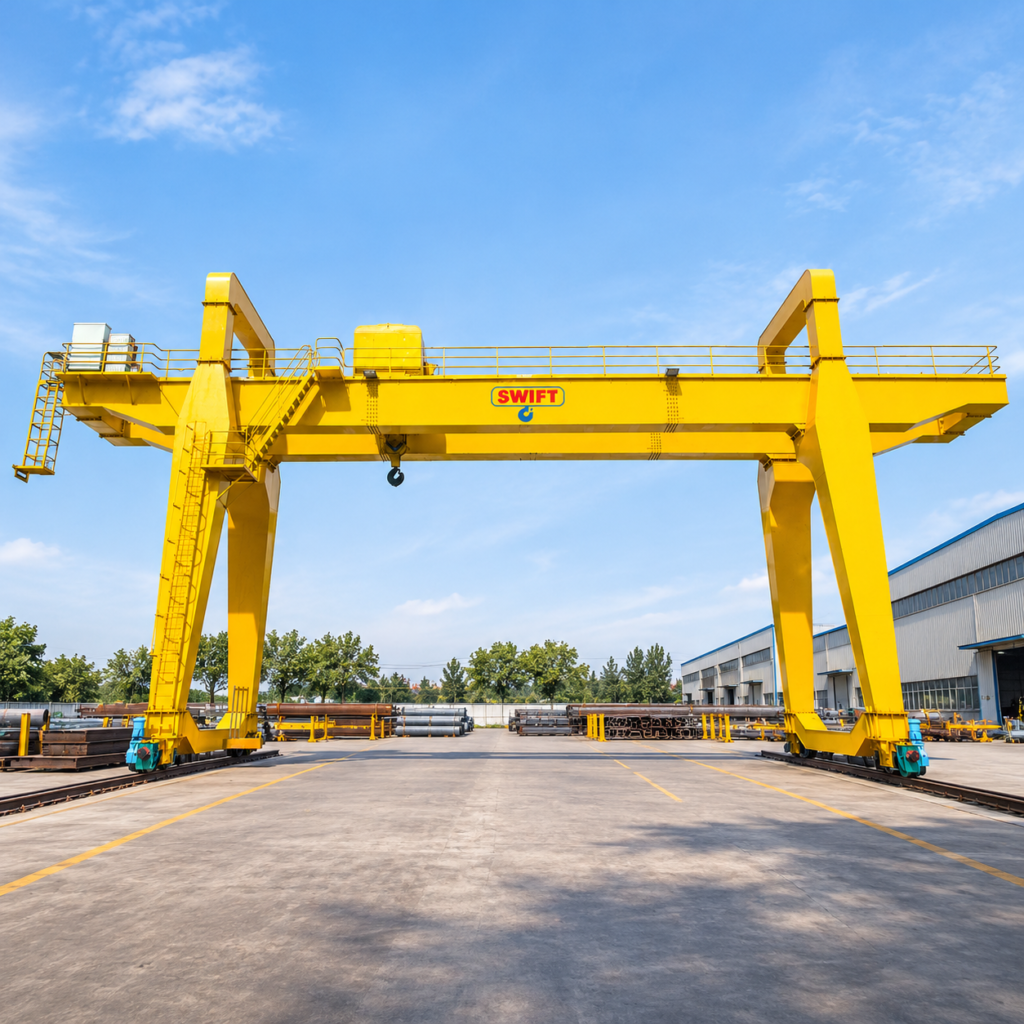
A gantry crane is supported by legs that travel along ground-level rails or tracks. Unlike conventional overhead cranes, it does not necessarily require an elevated runway structure supported by the building.
This makes it useful for outdoor applications such as:
- Construction material handling
- Steel storage and processing yards
- Manufacturing facilities
- Warehouses and loading areas
- Moving heavy industrial components
Gantry cranes also provide flexibility in arranging lifting operations across large working areas.
2. Single Girder vs Double Girder Gantry Crane
The two main configurations differ in their structural arrangement and lifting capabilities.
Single Girder Gantry Crane
A single-girder gantry crane uses one main bridge beam supported by two legs. It is generally suitable for moderate lifting requirements and applications where a simpler crane arrangement is preferred.
Key characteristics include:
- Suitable for moderate lifting tasks.
- Uses standard hoists in single-girder configurations.
- Appropriate for general material handling.
- Offers a practical solution for applications with moderate load requirements.
Double Girder Gantry Crane
A double-girder gantry crane uses two main bridge beams supported by the crane legs. This configuration is suitable for heavier lifting requirements and demanding industrial applications.
Its key characteristics include:
- Designed for heavier loads.
- Uses open winch trolley arrangements.
- Suitable for demanding industrial material handling.
- Provides flexibility for applications requiring higher lifting performance.
Which one should you choose?
A single-girder design may be suitable for moderate loads, while a double-girder design is generally more appropriate for heavier materials and demanding lifting operations. The final selection should consider the required capacity, span, lifting height and operating duty.
3. Important Factors When Selecting an Outdoor Gantry Crane
Outdoor installations require careful consideration of environmental and operational conditions.
Wind Conditions
Wind can affect crane stability and the movement of suspended loads. The crane should be designed according to the site’s operating and out-of-service wind conditions. Appropriate parking and wind-restraint arrangements should also be considered.
Corrosion Protection
Exposure to rain, humidity and industrial dust can affect structural components over time. Suitable protective coatings and regular maintenance help protect the crane against corrosion.
Electrical Protection
Motors, control panels, switches and electrical connections should have suitable protection against moisture and dust. The required protection depends on the operating environment.
Ground and Rail Conditions
The supporting surface, foundations and travel rails must be designed to withstand the loads imposed by the crane. Proper alignment and maintenance are also important for smooth crane movement.
Operating Requirements
Consider how frequently the crane will operate, the weight of materials being lifted and the distance they need to travel. These factors help determine the appropriate crane configuration and specifications.
4. Safety Features for Outdoor Gantry Crane Operations
Safety should be considered during crane selection, installation and daily operation.
Depending on the application, useful safety features include:
- Load limiters and load indicators.
- Anti-collision systems for multiple cranes.
- Slack wire limit switches.
- Audible alarms and bridge lights.
- Radio remote controls.
- Crane parking locking arrangements.
Outdoor operations should also follow site-specific wind limits and safe lifting procedures. Cranes must be secured appropriately when not in operation.
5. How to Choose the Right Gantry Crane for Your Facility
Before selecting a gantry crane, evaluate these essential requirements:
| Selection factor | What to consider |
|---|---|
| Load capacity | Maximum weight of the material being lifted |
| Crane span | Distance between the supporting legs |
| Lifting height | Required hook height and clearance |
| Girder configuration | Single or double girder based on load requirements |
| Operating frequency | Number of lifting cycles and working hours |
| Site conditions | Wind, rain, dust and humidity |
| Safety requirements | Load limiters, alarms and other safety options |
| Maintenance | Accessibility of components and servicing requirements |
A crane designed around these requirements is more likely to deliver reliable performance and suit the facility’s long-term material handling needs.
6. SWIFT Gantry Cranes for Industrial Applications
Consolidated Swift Industries Limited manufactures SWIFT gantry cranes for demanding industrial material handling applications. Available in single- and double-girder configurations, these cranes are designed for both indoor and outdoor operations.
Key specifications and features include:
- Capacity: 1 ton to 50 tons.
- Span: Customizable up to 35 metres.
- Configurations: Single girder and double girder.
- Hoisting arrangements: Standard hoists for single-girder models and open winch trolleys for double-girder models.
- Customization: Configurations tailored to specific application requirements.
- Optional safety features: Load limiters, anti-collision systems, radio remote controls, alarms and crane parking locks.
Their modular design also supports simplified maintenance and reduced downtime.
If you are planning an outdoor material handling installation, explore SWIFT Gantry Cranes to learn more about the available configurations and specifications.